
Editorial
DOI:
https://doi.org/10.58594/rtest.v5i2.1Abstract
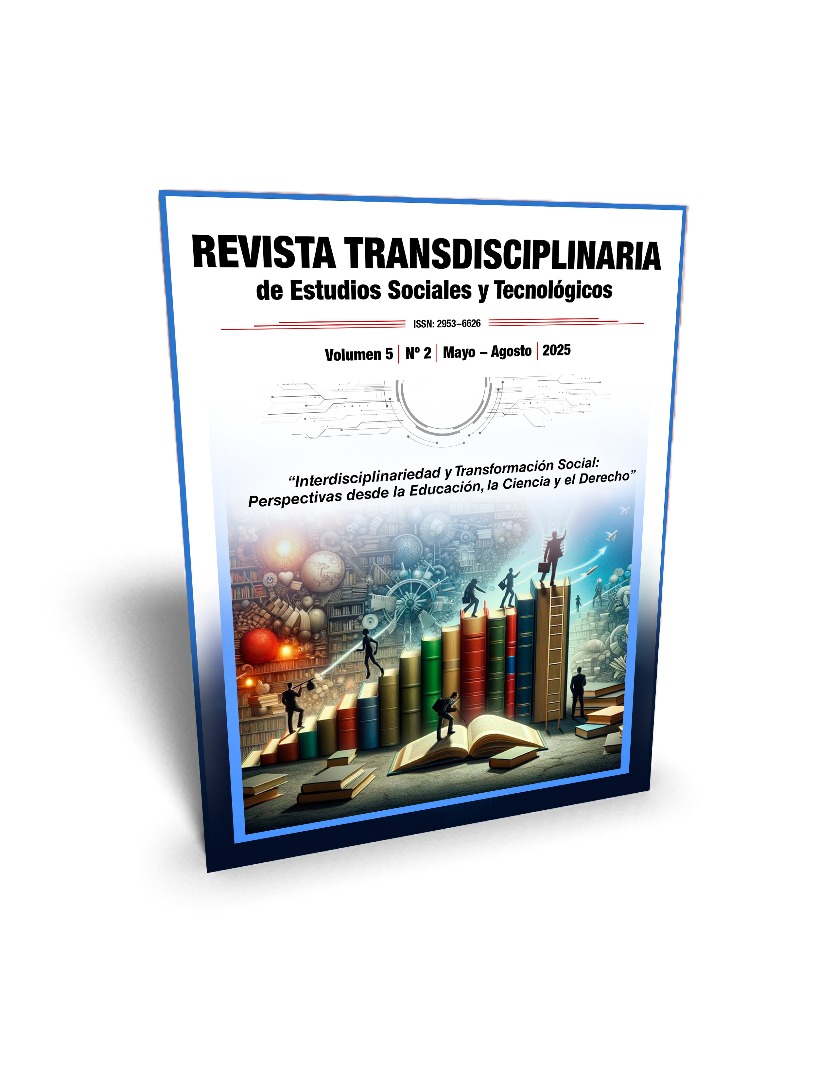
Esta edición presenta una selección de artículos que reflejan la riqueza y diversidad del pensamiento científico contemporáneo, articulando saberes provenientes de las ciencias sociales, jurídicas, educativas, ambientales y tecnológicas. Las contribuciones aquí reunidas permiten comprender cómo los desafíos del presente requieren respuestas interdisciplinares y enfoques renovadores que promuevan tanto la transformación institucional como el bienestar humano y ambiental.
Desde el campo educativo, se analiza el papel de las TIC en el apoyo a estudiantes con TDAH, el desarrollo de la competencia comunicativa intercultural a través del enfoque CLIL, y las habilidades tecnológicas de la Generación Z, destacando las demandas de una educación inclusiva, multilingüe y adaptada a la era digital. A su vez, se examinan fenómenos sociales sensibles como el suicidio en la adolescencia, subrayando la necesidad de intervenciones preventivas desde una mirada integral.
El enfoque jurídico y político se hace presente en los estudios sobre el anteproyecto de ley del Registro Civil y la aplicación de la cláusula de nación más favorecida en los tratados bilaterales de inversión de Cuba. Junto a ellos, se presentan investigaciones orientadas al desarrollo sostenible y la gestión del entorno: el uso de sistemas de información geográfica para la toma de decisiones medioambientales, la optimización de procesos de tratamiento de agua, y la implementación del diseño sustentable en la educación superior angoleña. Esta diversidad temática converge en una apuesta común por el conocimiento crítico, aplicado y comprometido con el desarrollo humano y planetario.
Downloads
Downloads
Published
How to Cite
Issue
Section
License
Copyright (c) 2025 Rolando Medina

This work is licensed under a Creative Commons Attribution-NonCommercial-ShareAlike 4.0 International License.
Authors who publish in Revista Transdisciplinaria de Estudios Sociales y Tecnológicos (RTEST), agree to the following terms:
1. Copyright
Authors retain unrestricted copyright to their work. Authors grant the journal the right of first publication. To this end, they assign the journal non-exclusive exploitation rights (reproduction, distribution, public communication, and transformation). Authors may enter into additional agreements for the non-exclusive distribution of the version of the work published in the journal, provided that acknowledgment of its initial publication in this journal is given.
© The authors.
2. License
The articles are published in the journal under the Creative Commons Attribution-NonCommercial-ShareAlike 4.0 International License (CC BY-NC-SA 4.0). The terms can be found at: https://creativecommons.org/licenses/by-nc-sa/4.0/deed.en
This license allows:
- Sharing: Copying and redistributing the material in any medium or format.
- Adapting: Remixing, transforming, and building upon the material.
Under the following terms:
- Attribution: You must give appropriate credit, provide a link to the license, and indicate if any changes were made. You may do this in any reasonable manner, but not in any way that suggests the licensor endorses or sponsors your use.
- NonCommercial: You may not use the material for commercial purposes.
- ShareAlike: If you remix, transform, or build upon the material, you must distribute your creation under the same license as the original work.
There are no additional restrictions. You may not apply legal terms or technological measures that legally restrict others from doing anything the license permits.













